

ZF LIFEGUARDFLUIDS AND OIL CHANGE KITS
ZF recommends oil changes every 80,000 to 100,000 kilometres
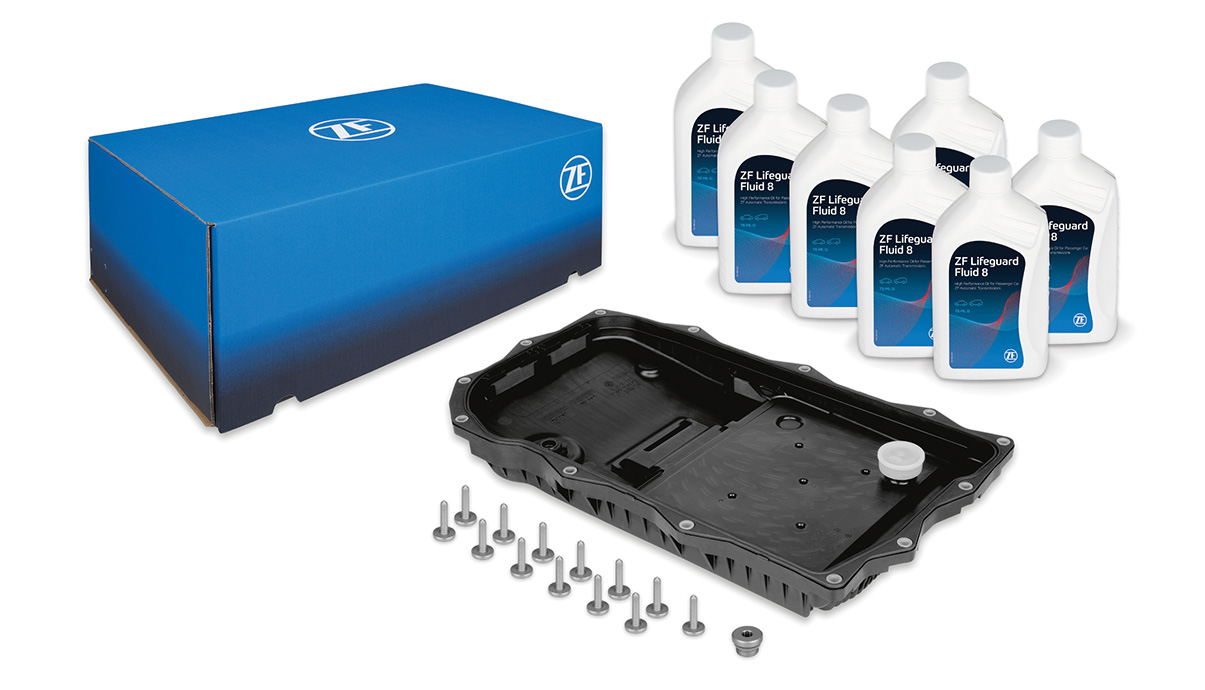
ZF LifeguardFluids are formulated specifically for individual transmissions and developed alongside the hardware to ensure long service life, stable friction behaviour, and consistent shifting performance.
The fluids use high-grade base oils and specialised additive packages suited to six-, seven-, eight- and nine-speed applications.
While many ZF transmissions are factory-filled for standard service life conditions, real-world driving factors such as towing, frequent short trips, and sustained high-speed driving can accelerate oil ageing.
Before starting an oil change, always follow the vehicle manufacturer’s instructions. The engine must never be run, nor the vehicle towed, without transmission oil, as this can cause immediate damage.
Begin by removing any necessary underbody trims. Drain the old oil through the drain plug at the bottom of the oil pan and collect it in a suitable container.
During draining, inspect the oil condition – a burnt smell, metal chips or fragments may indicate internal transmission damage and should be assessed by a qualified ZF service centre.
When removing the oil pan, procedures differ depending on design. For metal oil pans, replace only the oil filter and sealing ring. Loosen and tighten screws in the sequence specified by the manufacturer to prevent distortion. Clean residual oil and the permanent magnet before installing the new filter and seal, observing the specified torque. Plastic oil pans typically integrate the filter and seal, requiring full replacement as a unit.
Reinstall the oil pan using new screws and tighten according to the prescribed sequence and torque. Fit a new drain plug with a new seal. Be careful when filling oil, as over- or underfilling or using oil at the wrong temperature can damage the transmission.
When refilling, the team at ZF recommends you use only the specified ZF LifeguardFluid, warning against using supplementary additives. Fill until oil runs from the filler opening. Start the engine at idle, shift through R and D back to P, then run the engine for 30 seconds at 2000RPM, then engage each gear for 10 seconds.
Check oil temperature before setting the final oil level. For example, 6HP units require 30–35°C and 8HP units up to 40°C. At the specified temperature, adjust the fill until only a slight overflow occurs, then close and torque the filler plug. The engine can then be switched off, completing the service.
For more information, visit www.zf.com/au