
AUTOMOTIVE PARTS AND AGRICULTURE – THE NEXT FRONTIER FOR RIGHT TO REPAIR
Australia’s automotive Right to Repair law was a landmark achievement for our industry

Stuart Charity, Chief Executive Officer
It established a simple but important principle: independent repairers should have fair access to the information they need to service and repair modern vehicles, and consumers should retain the right to choose who works on their vehicle.
However, technology does not stand still, and neither can Right to Repair.
While access to service and repair information remains fundamental, increasingly we are seeing new barriers emerge through software controls, digital authorisation, and restrictions on replacement parts. These developments risk undermining the strong competition and consumer benefits that the Motor Vehicle Information Sharing Scheme (MVIS) was designed to, and has been, delivering.
One issue receiving growing attention and which our members have given us feedback on, is “parts pairing.” This is where vehicle software prevents or restricts a legitimate replacement part from functioning unless it has been digitally authorised by the vehicle manufacturer.
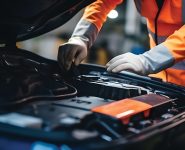
In practical terms, an independent repairer may be able to diagnose the fault, obtain a safe and suitable replacement part, and correctly install it – but still be prevented from completing the repair because the vehicle will not recognise or activate that part without manufacturer approval.
That should concern everyone in our industry.
Many high-quality aftermarket parts are produced by the same manufacturers that supply original equipment components. In some cases, the major difference is simply the branding on the box. Where a replacement part is safe, fit for purpose, and meets the required specifications, consumers should not face artificial technological or commercial barriers that prevent its use.
Parts pairing and similar restrictions can effectively tie motorists to authorised repair networks. The likely result is less competition, fewer repair choices, longer delays, and higher costs.
This does not mean that every restriction is unjustified. Modern vehicles are highly complex, and safety, security, and cybersecurity must always be taken seriously. But those considerations should not become a blanket justification for systems that unnecessarily restrict legitimate parts or prevent qualified independent repairers from completing work they are capable of undertaking safely.
The recent review of the MVIS focused appropriately on access to repair information, diagnostics, and software. Parts access was outside its scope, but it is increasingly clear that this must be the next conversation.
If manufacturers can use software or digital authorisation to restrict safe replacement parts, many of the competitive gains achieved through Australia’s Right to Repair law could gradually be eroded. This is why the AAAA is calling for the Australian Government to examine parts-related restrictions as the next frontier of competition reform.
At the same time, the principles behind automotive Right to Repair are being considered beyond passenger vehicles.
The Australian Government is examining how the existing framework can be expanded to agricultural machinery. This is an important opportunity, but any new framework must be informed by the people dealing with these issues every day.
To help bring that practical experience to the review, the AAAA recently convened a National Agricultural Machinery Repairers Roundtable, giving independent repairers an opportunity to speak directly about the barriers they encounter when servicing and repairing agricultural machinery. Treasury officials responsible for the review attended as observers to hear firsthand what is happening in workshops and on farms across regional Australia.
The discussion focused on practical issues including restricted access to diagnostic software, scan tools, security codes, software updates, calibrations, telematics, parts, and dealer-only functions.
These restrictions have consequences well beyond the workshop. When agricultural machinery cannot be repaired locally, farmers can face increased downtime, higher costs, and long travel distances to access an authorised service provider. During planting or harvest, even a relatively short delay can have a significant financial impact.
Independent repairers are already supporting farmers and regional communities across Australia. When they have access to the necessary information, tools and parts, they can keep machinery operating quickly and close to the farm. When access is restricted, capable businesses can be prevented from carrying out work they are fully equipped to perform.
Right to Repair is not an abstract policy debate. It is about keeping vehicles and machinery operating, supporting small businesses, strengthening competition, and protecting consumer choice.
Australia led the world by introducing a mandatory automotive information-sharing law. We should be proud of that achievement – but we must also recognise that the job is not finished.
As vehicles and machinery become more connected and software-dependent, the AAAA will continue pushing for a Right to Repair framework that evolves with technology and works in the real world – for repairers, motorists, farmers, and the broader Australian economy.