

EV NVH TESTING USING PICOSCOPE
Although EVs lack traditional engines, they introduce new NVH sources
As electric vehicle (EV) sales surpass 25 percent of global new car sales and are projected to
reach 40 percent by 2030, accurate diagnosis of Noise, Vibration, and Harshness (NVH) has become increasingly critical, says Mount Auto Equip Services.
Unlike internal combustion engine (ICE) vehicles, where engine noise often masks secondary disturbances, the quieter cabin environment in EVs expose vibration and acoustic imperfections more clearly.
As a result, Mount Auto Equip Services says professional NVH diagnostics such as the PicoScope with NVH accessory kit are essential for customer satisfaction, warranty cost reduction, and workshop differentiation.
Effective NVH analysis begins with frequency categorisation. Low frequencies from 0–20 Hz are primarily perceived as vibration, such as vehicle shake or judder, typically originating from driveline imbalance, suspension dynamics, or tyre irregularities.
The 20–200 Hz range contains both noise and vibration and often involves propshaft imbalance, suspension resonance, or driveline orders. Frequencies above 200 Hz are predominantly acoustic, encompassing wind noise, tyre-road interaction, structural resonance, and cabin rattles.
Equally important is vibration order analysis, which relates disturbances to rotational speed.
First-order vibrations occur once per revolution and usually indicate fundamental imbalance, while second and third order harmonics suggest more complex resonance or component specific excitation.
To master frequency and order analysis is critical for professional NVH diagnostics. Although EVs lack traditional engines, they introduce new NVH sources.
Electric motors and transmissions can generate vibration through electromagnetic excitation and gear mesh effects.
Propshaft and driveline components remain common contributors due to imbalance or misalignment.
Wheels and tyres are particularly influential at low speeds, while suspension components such as bushings, dampers, and linkages can transmit both vibration and noise through wear or resonance.
Without objective measurement correlated to vehicle speed or RPM, diagnosis quickly becomes speculative, warns Mount Auto Equip Services, which states accurate diagnosis can quickly and easily be achieved with the PicoScope and NVH software.
Professional NVH diagnostics follow a structured three stage process: source identification, transfer path analysis, and response characterisation.
A minor disturbance at the source can be amplified through structural resonance or poorly tuned isolators before becoming perceptible in the cabin.
For example, a 15 Hz cabin vibration may originate from wheel imbalance but may be intensified by a suspension isolator’s natural frequency. Ignoring any stage in the process risks misdiagnosis, says Mount Auto Equip Services.
Cabin NVH is a combined result of structural and acoustic behaviour. Trim and body rattles often appear in mid frequency ranges and are best confirmed using synchronised audio and vibration capture.
Suspension noises such as creaks or clunks may be speed or load dependent, while drivetrain disturbances including torque pulsations in multi speed EV gearboxes can contribute to underbody noise.
Comparative testing against a known good vehicle remains one of the most effective NVH diagnostic strategies, says Mount Auto Equip Services.
Back-to-back testing controls variables such as road surface and driving input, transforming subjective impressions into quantitative evidence when paired with the synchronised data capture.
An effective NVH setup must include triaxial accelerometers for low and mid frequency vibration, a cabin microphone for high frequency acoustic events, narrated road tests for contextual alignment, and vehicle data integration via J2534 to correlate CAN signals with noise and vibration. This enables order tracking and phase analysis essential for accurate diagnosis.
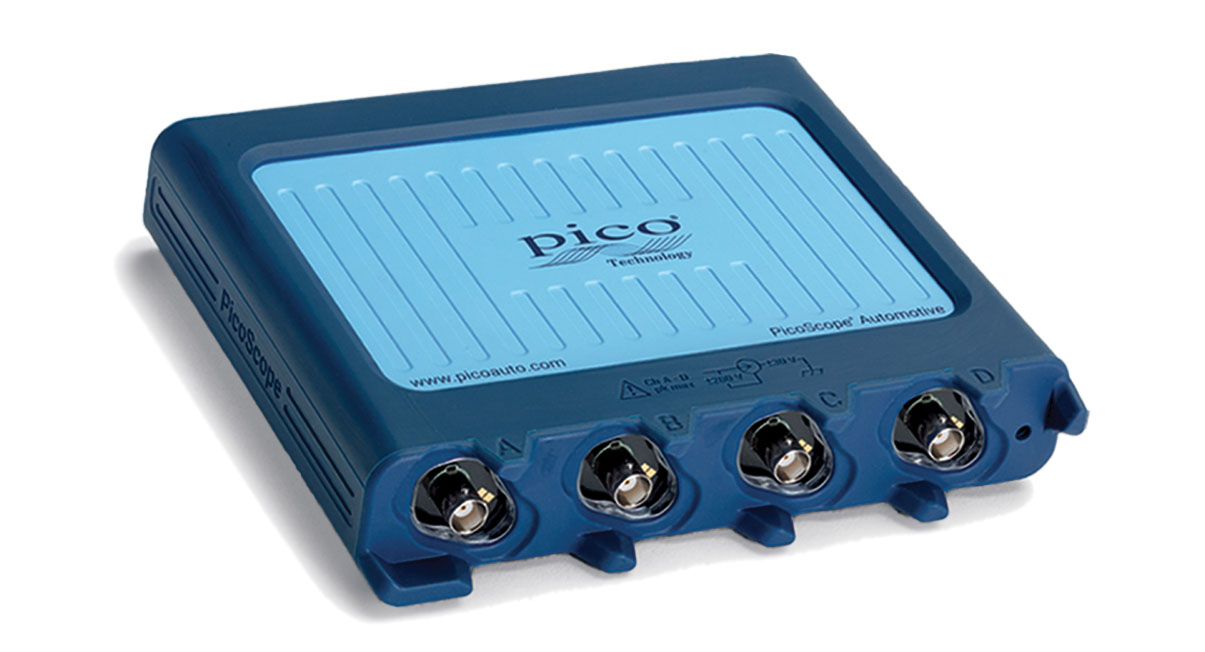
To support these methodologies, Mount Auto Equip Services says the PicoScope 4425A combined with the Pico NVH Kit provides a comprehensive solution.
With a wide frequency range, multi-channel synchronised acquisition, and advanced post processing tools, Mount Auto Equip Services says Pico Technology delivers the precision required to confidently identify and resolve NVH issues in modern EVs.
For further information, contact Mount Auto Equip Services on 02 9905 8055 or sales@maeservices.com.au or visit www.autoequipment.com.au