

HIGH VOLTAGE BATTERY RESISTANCE EVALUATION
Mount Auto Equip Services explains the Zenith Z7 allows technicians to easily monitor resistance values
In a high voltage electric vehicle battery, cell resistance is a critical indicator of both immediate performance and long-term safety.
It functions like ‘electrical friction’ within the battery, determining how efficiently energy can flow in and out.
The ability to monitor this resistance is important to monitor on an EV system over time.
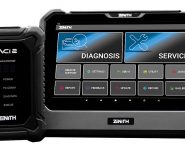
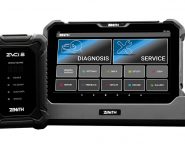
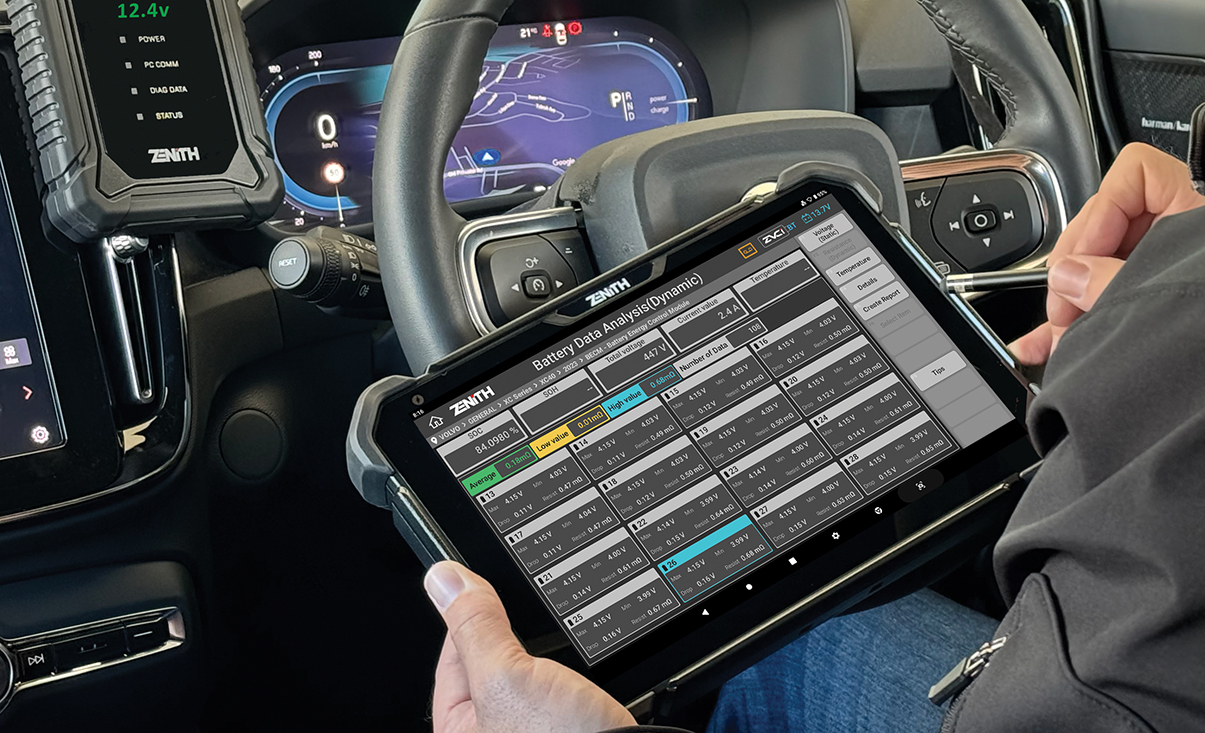
Mount Auto Equip Services says this dynamic resistance test can quickly and easily be performed ‘on car’ using the Zenith Z7 diagnostic tool via the BMS Monitoring service function in the software, allowing the user to generate a professional report to save results.
Low internal resistance is essential for high current demands of an EV, allowing the battery to deliver the massive ‘gulp’ of electricity needed for rapid acceleration, while high resistance causes a significant ‘voltage sag’ under load.
This can trick the vehicle’s computer into thinking the battery is dead, leading to premature power cut offs even if energy remains.
Internal resistance is a primary metric for determining when a vehicle’s high voltage battery is ‘worn out’. As batteries age, their internal resistance naturally increases due to chemical degradation, such as the thickening of the electrolyte or electrode wear.
In a high voltage pack with a large number of cells, the Battery Monitoring System (BMS) monitors individual cell resistance.
If one cell develops higher resistance than its neighbours, it can become a ‘bottleneck’, limiting the entire pack’s capacity and potentially causing the system to disable the battery for safety.
The heat generated by resistance is a big enemy of battery health and safety. High resistance leads to higher internal temperatures, putting stress on components and requiring more aggressive cooling.
If internal heat buildup exceeds the cooling system’s capacity, it can lead to thermal runaway, a dangerous self-sustaining fire.
Resistance works both ways, also affecting how the battery accepts energy.
During rapid charging, the Battery Monitoring System (BMS) must ‘push’ energy past this internal friction.
High resistance generates excessive heat during this process, forcing the BMS to slow down charging speeds to protect the cells.
Any energy spent overcoming resistance is lost as heat instead of being stored or used to move the car.
Using the Zenith Z7 diagnostic tool, a technician can easily monitor resistance values of a HV battery in milliohms within two decimal points measured by the BMS, by applying a repeated momentary load to the battery while driving and performing a small number of acceleration events.
The lower resistance value indicates better output efficiency and a healthier battery condition. A higher value can indicate battery degradation leading to increased heat generation and reduced output. Normal resistance ranges may vary depending on vehicle model and battery chemistry.
For more information, visit www.autoequipment.com.au or contact the Mount Auto Equip Services team on 02 9905 8055 or sales@maeservices.com.au