
INDUSTRY STEPS UP ON AIRBAG COMPATIBILITY FOR VEHICLE FRONTAL PROTECTION SYSTEMS
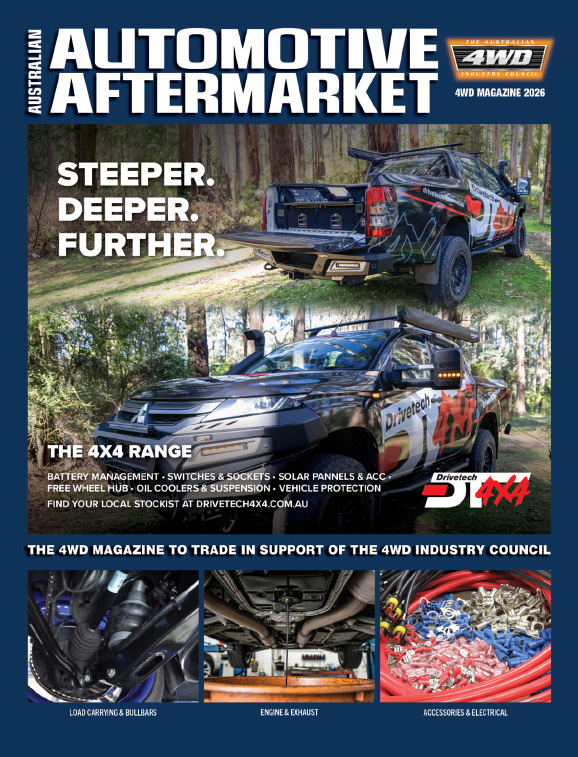
Vehicle frontal protection systems (VFPS) – including bull bars and similar accessories – are a critical part of the Australian automotive landscape

Detail of a SUV 4WD car with extreme all-terrain tyres in Icelandic landscape
For many motorists, particularly those travelling in regional, rural, and off-road environments, these systems are not cosmetic.
They are practical safety and protection equipment, designed for the realities of Australian roads, wildlife strike risk, and remote-area travel.
But like all safety-related vehicle equipment, frontal protection systems must work in harmony with the vehicle.
The Australian Automotive Aftermarket Association (AAAA) says this is why it has convened a new, industry-funded, Technical Working Group focused on airbag compatibility testing for VFPS.
“The purpose of the group is simple but important: to bring together industry expertise to develop clear, evidence-based guidance on how airbag compatibility should be assessed, tested, and demonstrated,” AAAA Director of Government Relations and Advocacy, Lesley Yates, said.
When a frontal protection system is fitted to a vehicle, it has the potential to alter the way that vehicle behaves in a crash.
The critical question is how the system affects airbag deployment timing, crash sensor performance, associated wiring or electronic control units, and overall occupant protection outcomes.
“These are complex engineering questions, and they deserve a robust engineering response,” Lesley said.
“At present, there is no contemporary, nationally agreed, and standardised test protocols for assessing VFPS airbag compatibility across light vehicles.
“Existing standards and guidelines are outdated, inconsistently applied between jurisdictions, or do not provide sufficient clarity on how VFPS should demonstrate that they do not adversely affect airbag performance.
“That uncertainty creates challenges for everyone: manufacturers, engineers, certifiers, regulators, fitters, and motorists.”
For manufacturers that invest heavily in design, testing and compliance, the absence of clear and modern frameworks can create commercial uncertainty. For certifiers and governing agencies, it can make it difficult to assess products consistently. For consumers, it can create confusion about what claims of “airbag compatible” mean. And for the broader market, it risks rewarding unverified claims over rigorous engineering evidence.
“The new Technical Working Group is intended to address that gap, bringing together a focused group of experts, including VFPS manufacturers and designers, automotive engineers with crashworthiness and structural analysis expertise, independent testing facilities, vehicle modifiers and 4WD accessory sector representatives, certifiers familiar with state and territory schemes, and regulatory observers where appropriate,” Lesley said.
The inaugural Group membership is made up of representatives from the following companies: Aeroklas/TJM, ARB, Autopac/Trimotiv, Bapcor/Opposite Lock, Dobinsons, Ironman 4×4, Offroad Animal, The Cruiser Company, Tuff, Ultimate9, and CoolDrive Auto Parts.
The Auto Innovation Centre’s Susanna Madden, an Automotive Engineer with 15-plus years of experience in the OEM and aftermarket environments specialising in design, manufacturing, and project delivery, has been appointed as Chair to steer the process and support the drafting.
With extensive experience in domestic and international programs from inception to successful launch, and committed to operational excellence, consistency, and continuous improvement in engineering practices, Susanna also currently leads process and procedure development at AIC.
“This is not about creating a single narrow test for every product or every vehicle,” Susanna said.
“The industry understands that vehicle platforms, VFPS designs, and available testing methods vary. The aim is to identify what constitutes acceptable, robust evidence – and to develop a practical framework that can support sound product development, credible certification, and consistent decision-making.”
The Working Group will examine existing Australian and international standards, regulations, OEM guidance, current test methods, and the modern vehicle fleet.
It will also map the way testing and certification are currently being approached across jurisdictions, and by industry.
From there, the group will consider practical performance criteria and test concepts, including physical testing, sled testing, instrumentation, and simulation where appropriate.
The intended outcome is a set of recommended test protocols that demonstrate VFPS are compatible with the vehicle’s safety systems and allow airbag deployment and occupant protection systems to operate as intended.
Importantly, the work will also consider how any recommended protocols could be recognised or referenced in national and state codes of practice, vehicle certification schemes, and modification guidelines.
“This is exactly the kind of work industry should be doing,” Lesley said.
“The aftermarket has deep technical capability. It includes engineers, designers, manufacturers, testers, and certifiers who work every day at the intersection of vehicle safety, product performance and practical fitment.
“By bringing those experts together in a structured process, AAAA is helping ensure that future guidance is not theoretical, outdated, or disconnected from real-world product development.”
The group’s work will be evidence-based, practical and implementation-focused. Its deliverables are expected to include a discussion paper outlining the problem and current state, a draft technical guideline or test protocol, and an implementation roadmap with recommended next steps.
“For AAAA members, this project is about more than compliance. It is about protecting the reputation of a critical Australian industry sector,” Lesley said.
“It is about supporting companies that do the right thing, invest in proper engineering and want a clearer pathway to demonstrate product safety. It is also about ensuring that VFPS continue to have a legitimate, trusted and well-regulated role in the Australian vehicle fleet.
“For government and regulators, the project offers something equally valuable: a serious, organised and technically informed industry process aimed at improving clarity, consistency and confidence.
“Vehicle Frontal Protection Systems will continue to matter in Australia. The task now is to ensure that the frameworks used to assess them are contemporary, robust and fit for purpose.
“By convening this Technical Working Group, AAAA is taking a practical step toward that goal — one grounded in evidence, engineering expertise, and a shared commitment to vehicle safety.”
For more from AAAA, visit www.aaaa.com.au