

OPENING DOORS TO THE FUTURE
A successful student engagement program was hosted at CRE
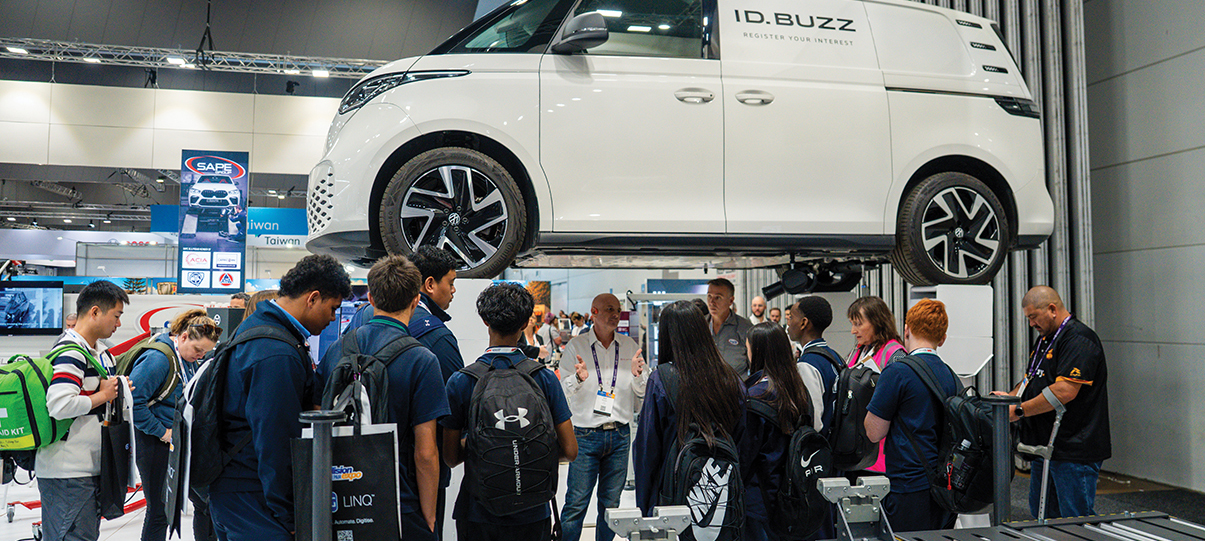
As the doors opened at the Collision Repair Expo (CRE), a group of students stepped into a world many had never seen before.
For some, it was simply a day away from the classroom. For others, it was a chance to explore career options.
Few knew just how much the collision repair industry had changed, or how many opportunities existed beyond the traditional perceptions of working on cars.
Over the course of the day, more than 60 students made their way through the exhibition halls, guided by a structured program designed to introduce them to the people, technology, and careers that keep Australia’s collision repair industry moving forward.
Students who arrived with little understanding of collision repair quickly found themselves immersed in conversations with technicians, business owners, trainers, suppliers, and industry leaders.
They watched advanced driver assistance systems being demonstrated, saw refinishing technologies up close, explored diagnostic equipment, and discovered the growing role technology plays in modern vehicle repair.
At each stop along the way, industry professionals generously shared their experiences, offering students a genuine insight into the careers available across paint and panel, auto glass, estimating, diagnostics, refinishing, and emerging technologies.
The initiative represented a collaboration between the Australian Collision Industry Alliance (ACIA), the Australian Automotive Aftermarket Association (AAAA), CRE organisers, exhibitors, schools and volunteers, all working towards a common goal: helping young people discover the opportunities available within the industry.
“Perhaps the most rewarding moments came when students realised the industry was much bigger than they expected,” ACIA Executive Administrator, Hiliary Bradbury, said.
“What many had imagined as a trade focused solely on repairing damaged vehicles turned out to be a sophisticated sector requiring technical knowledge, problem-solving skills, communication skills, technological expertise, and continuous learning.”
Teachers and career advisers were equally engaged. For many, the day provided a valuable opportunity to see first-hand the innovation, professionalism and career pathways available within the collision repair sector and helped build a stronger understanding of where Structured Workplace Learning, School-Based Apprenticeships and apprenticeship opportunities can lead.
“The success of the program was not measured simply by attendance numbers, although welcoming more than 60 students to the event was an achievement in itself. It was measured by conversations, curiosity, and connections,” Hiliary said.
“It was seen in students staying behind at exhibitor stands to ask one more question. It was evident in teachers collecting information to take back to their schools. It was reflected in the enthusiasm of exhibitors who recognised the importance of investing time in the next generation.
“Workforce attraction remains one of the biggest challenges facing the collision repair sector. The solution will not come from a single program or event, but days like this play an important role in opening doors and creating awareness.
“For many of the students who attended, the expo may simply have been an interesting day out. For some, it may have been the first step towards a future career. And for an industry focused on building its future workforce, that makes every conversation worthwhile.”
For more from ACIA, visit www.theacia.com.au