
KEEPING A GRIP ON THE ROAD
Shock absorbers are a critical safety component
 Shock absorbers play a vital role in both vehicle safety and comfort, controlling the vibrations generated by the suspension system and helping to keep tyres in consistent contact with the road surface.
By reducing wheel bounce and body movement, shock absorbers improve vehicle stability, passenger comfort, component reliability, and the protection of transported goods. Most importantly, a properly functioning suspension system maximises tyre-to-road contact.
While vehicle brake systems are routinely inspected, suspension performance is often overlooked.
No matter how effective a vehicle’s brakes are, they cannot perform as intended if the tyres are unable to maintain sufficient grip on the road.
Worn or defective shock absorbers can lead to increased stopping distances and reduced effectiveness of safety systems such as ABS and ESP. Yet many inspections still rely solely on visual assessments, meaning a significant number of defective shock absorbers remain undetected.
Like any vehicle component, shock absorbers have a limited-service life, and failure rates increase steadily with vehicle age.
Traditionally, suspension testing has been performed using large vibrating platform test benches.
While effective, AutoTest notes these systems are incredibly expensive, typically costing tens of thousands of dollars plus installation fees.
Further, AutoTest notes they occupy valuable workshop space, and readings can be affected by tyre condition and inflation pressure.
It states portable electronic suspension meters provide a practical alternative, allowing workshops and inspectors to assess suspension performance quickly, accurately, and consistently.
The AutoTest solution
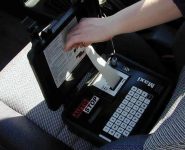
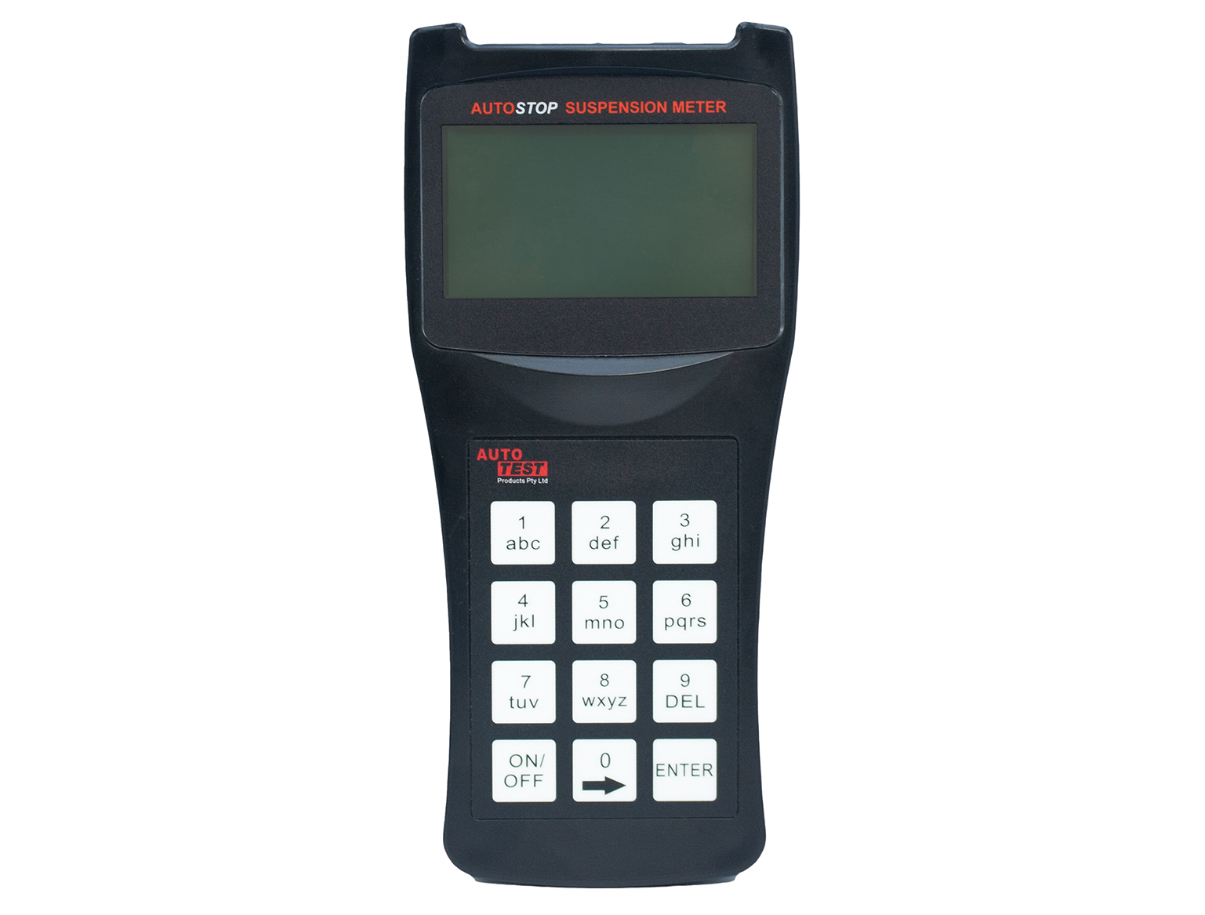
AutoTest says the AutoStop Suspension Meter provides a simple and effective way to objectively evaluate shock absorber performance without the need for bulky test benches.
The unit analyses the dynamic behaviour of the suspension system and calculates the shock absorber’s damping coefficient, an established indicator of suspension effectiveness.
Designed for simplicity, testing can be completed in just three easy steps, attach the meter, follow the on-screen prompts, then drive approximately one metre and brake to a stop, delivering fast, repeatable results with minimal operator training.
This allows technicians to identify worn or underperforming shock absorbers that may not be detected during a visual inspection.
The AutoStop Suspension Meter enables suspension testing to become a routine part of vehicle inspections, helping workshops deliver more comprehensive safety assessments.
Understanding damping performance
Suspension testing is designed to determine the damping coefficient of the shock absorber, a measure of its ability to control oscillation and maintain tyre contact with the road.
Research and experimental testing have shown that when damping performance falls below a critical threshold, tyre adhesion decreases significantly and vehicle performance deteriorates.
Studies have established a minimum acceptable damping coefficient of approximately 0.12, below which vehicle safety may be seriously affected.
Testing allows these performance issues to be identified before they become a safety risk as they are often difficult to spot visually.
Safer vehicles through better testing
AutoTest notes extensive testing has shown that suspension performance can be accurately assessed using portable electronic measurement systems.
By incorporating objective suspension testing into routine inspections, workshops can move beyond visual assessment alone and identify safety issues that might otherwise go unnoticed.
AutoTest states the AutoStop Suspension Meter offers a practical, portable, and proven solution for measuring suspension performance, helping ensure vehicles maintain the grip, stability, and safety needed to keep drivers in control on the road.
For more information, visit www.autotest.net.au or contact AutoTest on 03 8840 3017 or sales@autotest.net.au