

SODIUM ION SETS NEW STANDARD FOR TOTAL COST OF OWNERSHIP
In this article, Aeson Power takes a look at the business case for Sodium Ion battery technology
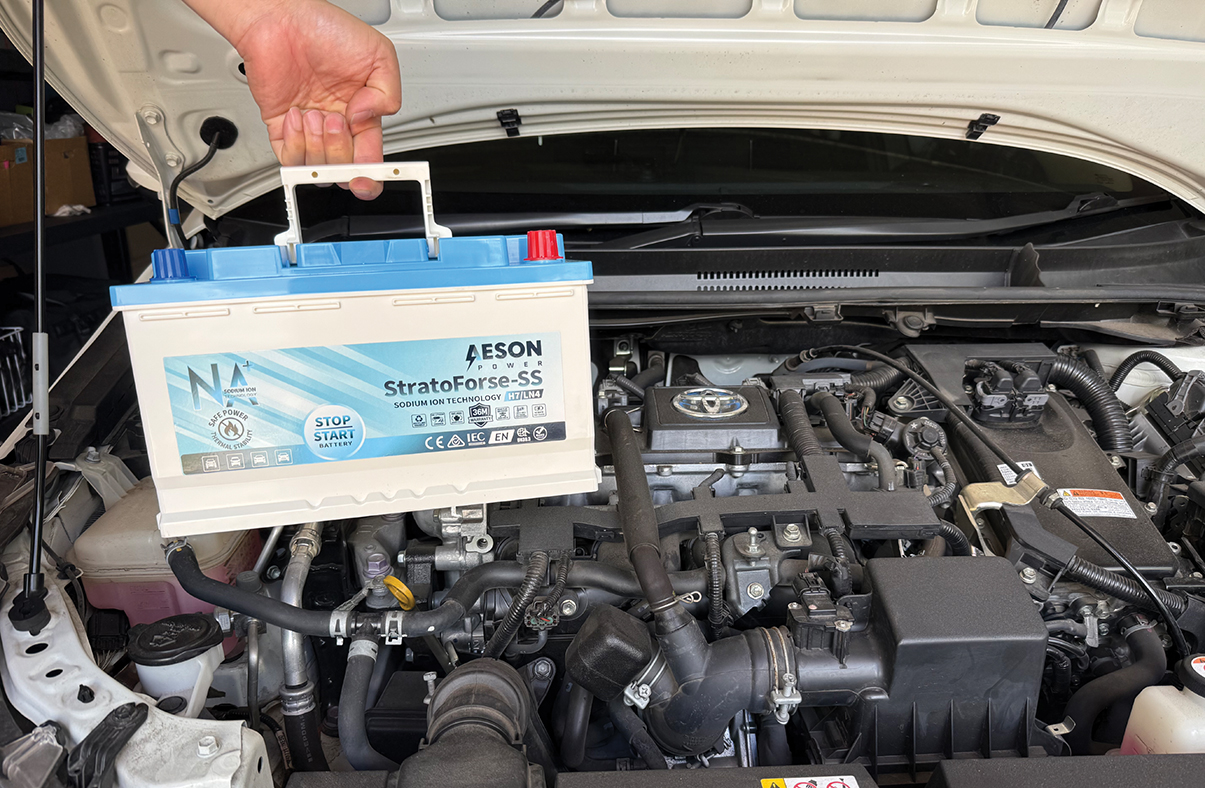
Fleet procurement teams have traditionally focused on upfront battery cost.
On paper, this makes sense: batteries are consumables, and cheaper units reduce immediate expenditure.
In practice, however, Aeson Power warns this approach often leads to higher overall costs.
“The true cost of a fleet battery is not the purchase price,” Aeson Power Sales and Marketing Manager – Oceania, Scott Clark, said.
“It is instead the combination of replacement frequency, labour and service callouts, vehicle downtime, and administrative overhead.
“In many fleets, the cost of a single roadside assistance event can exceed the price of the battery itself.”
Aeson Power offers the following as a real-world example.
“Take for example a 100-vehicle fleet operating across mixed metro and regional environments,” Scott said.
“Lead-acid batteries typically last around 24 months, requiring multiple replacements over a five-year period.
“Each failure may trigger a technical callout, lost productivity, and customer service disruption.
“When these costs are aggregated, the battery becomes one of the most volatile operating expenses in the fleet.”
The Sodium-Ion shift
Aeson Power says sodium-ion is changing these economics by attacking the biggest cost drivers.
“Longer service life is the starting point. With typical lifespan extending to 42-48 months, replacement frequency drops significantly,” Scott said.
“Failure reduction is even more important. Sodium-ion’s ability to tolerate PSOC operation and recover from deep discharge reduces the number of unexpected breakdowns.
“Downtime reduction becomes the largest contributor to savings. Fewer failures mean fewer interruptions to operations, and more predictable fleet performance.
“For example, if you look at the numbers, a five-year total cost model shows Lead-acid at ~$1,488 per vehicle, AGM at ~$1,506 per vehicle, and Sodium-ion at ~$1,002 per vehicle.
“Across a 100-vehicle fleet, this equates to savings of approximately $50,000 over five years.
“Importantly, these savings are not driven by battery price, but by reduced service events, lower downtime costs, and fewer replacements.
“For fleet managers, the key benefit is reduced cost volatility. Instead of unpredictable failures and reactive maintenance, sodium-ion enables a more stable, planned approach to fleet operations.
“This has flow-on benefits for budget forecasting, resource planning, and customer service reliability.”
In summary, Aeson Power warns that the cheapest battery is rarely the most cost-effective.
“Sodium-ion shifts the focus from purchase price to total lifecycle value, delivering measurable savings where it matters most: in operations,” Scott said.
“Get in contact to start a low cost, real-world test program in your fleet and see the results for yourself.”
For more information, contact Scott Clark on 0418 184 552 or visit www.aesonpower.com.au