
AUSSIES NOT HAPPY WITH AI IN THEIR CARS
Australians are adopting AI faster than at any point in the technology’s short history, yet the same drivers are growing warier of the intelligence built into their cars
Autonomous emergency braking has been mandatory on newly introduced models since March 2023 and on every new vehicle sold since March 2025, with lane-keeping and blind-spot systems following on behind.
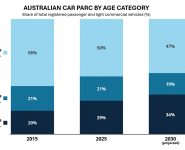
By 2030, around 43 percent of the vehicles on Australian roads are expected to carry these systems, whether drivers ask for it or not.
Consumers are embracing the AI they choose to use
The May edition of Fifth Quadrant’s Consumer Tracker shows how far AI use has spread.
Across a nationally representative sample of more than 1,000 Australians, 72 percent had used a generative AI tool in the past month, and nearly half rated their understanding of these tools as good or very good, up from 31 percent in September 2024.
Two in five now describe themselves as heavy or regular AI users, rising to almost two thirds among Gen Z.
AI is the first choice for health information for 22 percent of Australians, up from nine percent, while search engines have fallen from 64 to 47 per cent.
In the car, the story reverses
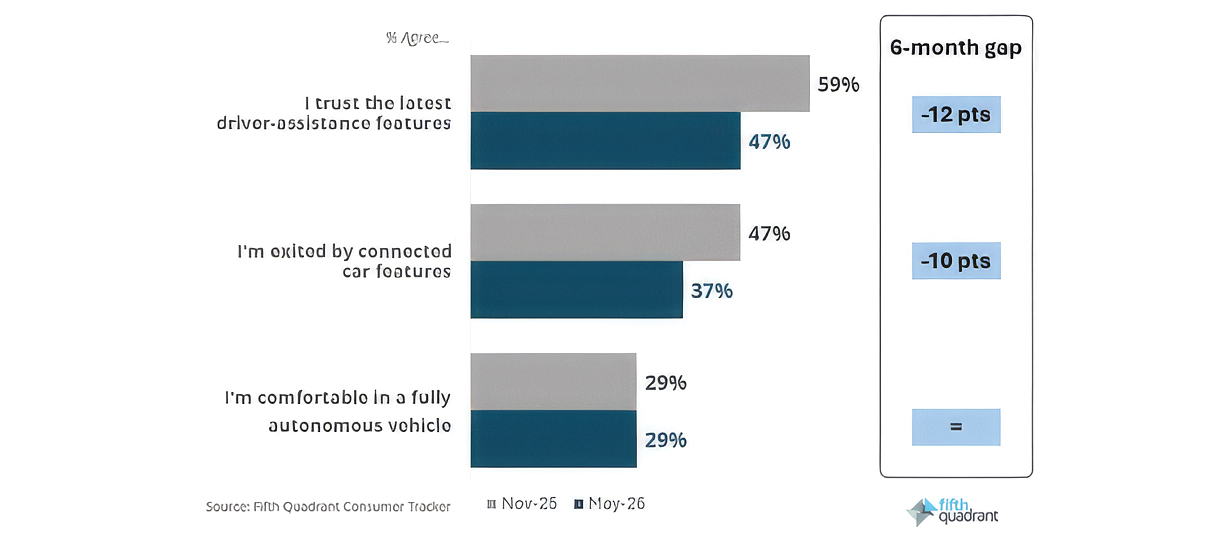
In November 2025, 59 percent of Australians agreed that lane-keeping, adaptive cruise control, and blind-spot monitoring made driving safer; by May 2026 that had dropped to 47 percent.
Enthusiasm for connected car technology such as over-the-air updates and in-car AI assistants slipped from 47 to 37 percent over the same period, and comfort with fully autonomous driving remains below 30 percent.
Why might this be?
Drivers do not opt into ADAS. It brakes, steers, or beeps without invitation.
ANCAP has acknowledged the tension: its 2026 rating protocols, revised partly in response to consumer feedback, will reward lane-support systems that work quietly and cooperatively rather than those which drivers find abrupt or irritating.
What this means for workshops
For workshops, the immediate opportunity is explaining the technology to the people already experiencing it.
A customer whose car nags them is a customer with a question, and the business that answers it well earns trust and repeat work.
That matters more in a cost-conscious market: almost one in three drivers are using their vehicle less than a year ago, and one in five have delayed non-essential servicing.
A windscreen replacement or a suspension change can knock a safety-critical sensor out of alignment, and getting calibration wrong carries real safety and liability exposure.
With electrified vehicles the intended next purchase for four in ten drivers, the cars entering the parc will carry denser sensor suites, not fewer.
Staff who can explain what a fault light means and when recalibration is genuinely required can turn scepticism into repeat bookings.
Three quick tips
1. Script the fault-light conversation: staff should be able to say what the warning means, why the system intervened, and whether the car is safe to drive.
2. Put the recalibration triggers on the job card: windscreen replacement, suspension work, and any camera or radar disturbance call for calibration under the AAAA and ARCA ADAS Industry Code of Conduct.
3. Show the work: issue a written calibration record with the invoice. It tracks the work done, supports the price, and answers questions before they are asked.
This column was prepared for AAA Magazine by Fifth Quadrant, the AAAA’s partners in the AAAA Aftermarket Dashboard which is delivered to AAAA members each quarter.
For more information about its services, visit www.fifthquadrant.com.au or contact Ben Selwyn on ben@fifthquadrant.com.au